English









The Newfoundland pony is a critically endangered breed of small equine from Newfoundland and Labrador in Canada. These ponies descended from British pony breeds brought to the Western Hemisphere by English, Irish, and Scottish settlers.
Already well adapted to the harsh climate of North Atlantic islands, these ponies were able to thrive in their new Canadian home. Settlers kept free-roaming herds of these ponies in Newfoundland, where the population once grew into the thousands.
Newfoundland ponies were used as hardy and versatile all-around horses on the island for centuries, until a ban on open pasturing and the mechanization of agriculture drove them to the brink of extinction. Today, Newfoundland ponies are protected by the Heritage Animals Act.
This breed profile will discuss the history, characteristics, health problems, and nutritional needs of the Newfoundland pony breed. Keep reading to learn more about feeding and caring for Newfoundland ponies.
Newfoundland Pony History
The history of the Newfoundland pony breed is closely intertwined with the history of their native homeland. These ponies were essential to early pioneer life in Newfoundland.
This heritage breed survives today thanks to protection from the Canadian government and dedicated breed enthusiasts.
Origin
Ponies first accompanied settlers to Newfoundland in the early 17th century. John Guy, the first Proprietary Governor of Newfoundland, imported a shipment of Dartmoor Ponies from England in 1611.
Other shipments of ponies from all over the British Isles followed. Historical records show these ponies included Connemaras, Exmoors, Highland, Fell, and New Forest ponies. [1]
DNA studies of native Canadian horse populations confirm genetic links between Newfoundland Ponies and several British breeds. The climate of Newfoundland closely resembled that of the islands where these horse breeds originally developed, enabled their descendants to flourish in the newly established settlements. [2]
Farmers kept early Newfoundland ponies in free-roaming herds on the island, allowing the ponies to graze and reproduce with minimal human intervention. Natural selection acted on the population to favour hardy animals that could survive the harsh weather and sparse winter vegetation.
Historic Use
Although they lived in herds on open pastures, Newfoundland ponies were not considered feral. Settlers relied on the ponies for everyday life in Colonial Newfoundland. Their agricultural lifestyle required strong ponies to plow fields, haul kelp and wood, pull fishing nets, and transport families.
By 1935, the island’s pony population peaked at 9,000, but their numbers soon sharply declined with the modernization of agriculture and societal changes. A mid-20th century ban on free-roaming livestock in Newfoundland further contributed to their population decline. [1] Exports of ponies to France for horse meat also increased in the 1970s.
Shortly before the Newfoundland pony neared extinction, breeders stepped in to preserve the breed. They gathered the free-roaming herds on the island and began breeding the horses in captivity.
In 1997, the government of Newfoundland and Labrador passed the Heritage Animals Act, which made these horses the first recognized heritage animal of the province. This law gave Newfoundland ponies protected status, but the breed is still considered critically endangered. [3]
Breed Registry
The provincial government appointed the Newfoundland Pony Society (NPS) as the official organization responsible for maintaining the breed registry for these ponies. Incorporated in 1981, the NPS is dedicated to preserving, protecting, and promoting the Newfoundland pony breed.
| Breed Summary | |
|---|---|
| Breed Name | Newfoundland Pony |
| Breed Type | Pony |
| Origin | Newfoundland and Labrador, Canada |
| Breed Registry | Newfoundland Pony Society (NPS) |
| Population Status | Critically endangered |
| Average Height | 11 – 14.2 hh |
| Average Weight | 400 – 800 lb (180 – 360 kg) |
| Common Coat Colors | Bay, black, brown, chestnut, dun, grey, roan |
| Conformation | Hardy, sure-footed, thick mane, furry ears, hooded eyes, low-set tail, feathered fetlocks, hard hooves |
| Common Uses | Recreational riding, driving, hunter/jumper, dressage, saddle seat, equitation, trail riding |
| Temperament | Docile, willing, easygoing, friendly, curious |
| Best For | Families, children, recreational riders and drivers |
| Common Health Concerns | Equine metabolic syndrome (EMS), obesity, laminitis, dental problems, navicular syndrome |
What's your top priority with your horse's health?

Enter your email to receive your store credit
Breed Characteristics
Only ponies that meet the breed standards are eligible for registration by the Newfoundland Pony Society. While ponies must demonstrate Newfoundland ancestry, they are also evaluated based on physical traits and temperament characteristics of the breed.
Conformation
Newfoundland ponies range in height from 11 to 14.2 hands. These ponies can also be a variety of types. Some are more refined, while others are larger and stocky. This variation is likely due to influences from different breeds over the development of Newfoundland ponies.
All Newfoundland ponies should give the overall impression of a hardy, sure-footed, and sound winter animal. They have thick manes, furry ears, hooded eyes, a low-set tail, and feathered fetlocks. Their hooves are hard, and their legs should be free of defects.
Colours
Newfoundland ponies can be a variety of colours, but pinto and spotted patterns are not accepted. Coat colours often change in the winter due to the breed’s heavy winter coat.
Standard coat colours include:
- Bay
- Black
- Brown
- Chestnut
- Dun
- Grey
- Roan
Temperament
The Newfoundland pony’s docile temperament is a defining characteristic of the breed. Newfoundlands are described as having good dispositions with willing work ethics and easygoing personalities.
Their temperament makes the breed suitable for a variety of handlers. Most owners find Newfoundland ponies to be friendly and curious, but like other breeds, they can be cheeky. They enjoy interacting with humans and other horses.
Disciplines
Initially bred as all-around ponies for early settlers, modern Newfoundland ponies are versatile and excel in many different jobs and disciplines. These ponies are intelligent and easily trained.
Newfoundland ponies are primarily used for recreational riding and driving. They are ideal family ponies, often beloved by children due to their size and temperament. While most adults are too large to ride them, Newfoundland ponies can be used as driving horses.
Some Newfoundlands are successful show ponies under saddle and in harness. Other popular disciplines for the breed include hunter/jumper, dressage, saddle seat, equitation, and trail riding.

Newfoundland Pony Health
Newfoundland ponies are hardy animals that possess great resilience, having survived for centuries with minimal care from humans. However, through good care and management, owners can safeguard the breed’s future and keep their ponies in optimal health.
Genetic Diseases
Horse breeds with small populations typically have low genetic diversity and a higher risk of hereditary health issues.
Landrace breeds that develop in geographic isolation are especially susceptible to inbreeding depression. This term describes the reduced fitness and vitality observed in offspring resulting from the mating of closely related individuals. [4]
Despite this, studies have revealed unexpectedly high genetic diversity in the Newfoundland pony breed. The wide variety of horses brought to Newfoundland throughout the island’s history likely resulted in the diverse gene pool of Newfoundland ponies. [5]
No known genetic diseases have been identified in the Newfoundland pony breed, which is a good sign for the breed’s future conservation. However, the metabolic syndrome to which they are prone is almost certainly genetic at its roots. The gene(s) have not yet been identified.
Health Problems
Newfoundland ponies have a predisposition for equine metabolic syndrome (EMS), which is characterized by insulin resistance and an increased risk of laminitis. [6] Easy weight gain and obesity can also occur in ponies predisposed to metabolic syndrome.
Research also indicates that metabolic syndrome is prevalent in the native British ponies from which Newfoundlands are descended. However, risk factors for EMS can be effectively addressed with appropriate care and management. [7]
Dental problems are a common concern in senior Newfoundland ponies. Horses that cannot effectively chew their feed may become undernourished and experience digestive issues, even when fed a balanced diet. [8]
While Newfoundland ponies are generally sound with good feet, navicular syndrome can cause lameness in the breed. This chronic condition is associated with degeneration of the navicular bone and surrounding soft tissues. [9][10]
Care and Management
Owners can support the breed’s future by providing their Newfoundland ponies with quality basic care to support their physical, mental, and emotional needs.
All ponies need regular veterinary care and a preventive wellness program with scheduled vaccinations and deworming assessments. Dental exams and teeth floating should start at a young age, but older Newfoundland ponies may need more frequent exams to monitor for issues.
Newfoundland ponies, like all equines, require attentive farrier care to maintain their hoof health. Regular trimming ensures that the hooves remain balanced, preventing uneven wear and potential lameness.
Farrier care is also important to prevent navicular syndrome, which is often linked to biomechanical stresses and excess loading forces on the navicular bone. Corrective shoeing can provide support for ponies with hoof problems. [11]
These ponies are more prone to skin irritations due to their thick manes, coats, and tails. Daily grooming can help remove debris and keep their skin and hair healthy, while also allowing owners to bond with their ponies.
Newfoundland ponies are hardy animals that do well living outside in most conditions. As long as they have access to safe shelter, these ponies typically don’t need blankets in cold climates. If your pony lives inside, provide daily turnout for free exercise and social interaction.
Newfoundland Pony Nutrition
Ponies have unique nutritional needs compared to larger horse breeds. They evolved to thrive on less nutrient-rich forage, which means they are more efficient in extracting energy from their food.
Make sure your Newfoundland Pony’s feeding plan is tailored to their specific bodyweight and health needs. Feeding a balanced diet is essential for managing health risks in these ponies and supporting the conservation of this breed.
Weight Maintenance
Newfoundland ponies are easy keepers, which means they store fat efficiently and are prone to obesity when overfed. They also require fewer calories per pound of body weight compared to larger horses.
While this efficient metabolism helped their ancestors survive harsh winters on the island of Newfoundland, it also predisposes the breed to metabolic disorders.
Closely monitor your pony’s weight, and make adjustments to their diet as needed. Regular body condition scoring can help you determine if your Newfoundland Pony is at a healthy weight.
Keep in mind that owners can mistake obesity in Newfoundlands for the naturally stocky build of certain pony types.
Sample Diet
The following sample diet is intended for a mature 600 lb (270 kg) Newfoundland Pony horse with normal body condition at maintenance (not exercising).
| Feed | Amount per day |
|---|---|
| Mid-Quality Hay (8% crude protein) | Free-choice |
| Salt | 15 g (1 tbsp) |
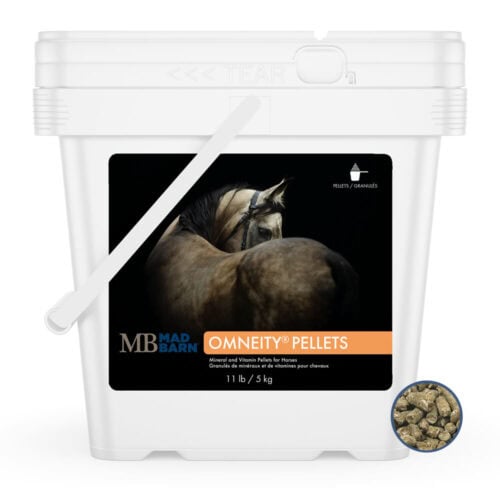
| Omneity® Pellets | 100 g (1 scoop) |
| Diet Analysis | |
| Digestible Energy (% of Req) | 107% |
| Protein (% of Req) | 128% |
| HC (ESC + starch; % Diet) | 8.8% |
Forage should provide the foundation for every equine diet, but grass and hay are often deficient in essential nutrients required to support your pony’s health. In particular, forage samples from Newfoundland are often classified as severely deficient in the trace mineral selenium. [14]
To correct for nutrient deficiencies in forage-only diets, it is important to feed your pony a balanced vitamin and mineral supplement with adequate selenium.
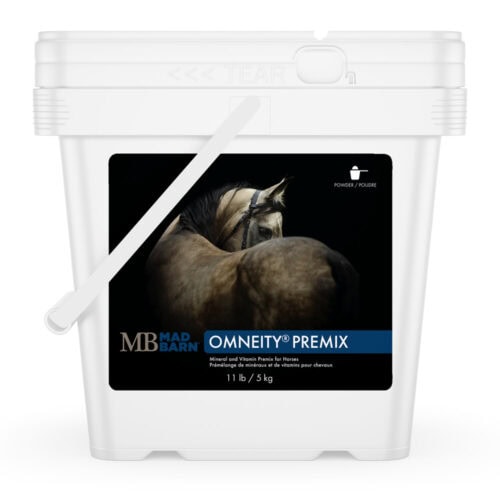
Mad Barn’s Omneity® is a comprehensive vitamin and mineral supplement that provides key nutrients required to support hoof health, immune function, energy metabolism and gut health in Newfoundland ponies. Omneity® is also fortified with a full serving of selenium-enriched yeast, making it ideal for equines from Newfoundland.

Forage
Newfoundland ponies vary in weight between 400 – 800 lb (180 – 360 kg). With such a broad range, it’s essential to tailor their forage intake based on the individual pony’s body weight.
Typically, a horse should consume about 2% of its body weight in forage daily. A medium-sized 600 lb (270 kg) Newfoundland pony is expected to consume approximately 12 pounds (5 kg) of average quality, low sugar (ESC) and starch grass hay daily. Sugar (ESC) and starch are collectively known as hydrolyzable carbohydrates (HC) and are the components of NSC which are digestible in the small intestine and contribute to the insulin response.
Providing free-choice forage mimics the natural grazing behaviour of Newfoundland Pony herds, while also supporting your horse’s digestive health. However, Newfoundland ponies may consume excess calories with unrestricted access to hay. Placing hay in a slow feeder can regulate intake while maintaining a constant forage source.
Full-time turnout on rich pasture grass is not suitable for most Newfoundland ponies, and can increase the risk of laminitis. You can keep your pony safe during turnout by following good pasture management strategies, turning ponies out in a dry lot with hay, or using a grazing muzzle. [12]
Feeding Recommendations
Forage is usually sufficient to meet the energy and protein needs of Newfoundland ponies. Even ponies in regular training rarely require grain or commercial feeds to meet their calorie needs.
Commercial concentrates and high-starch grains also increase the risk of metabolic problems and digestive upset in Newfoundland ponies. [13] Instead, use fiber-rich hay pellets and beet pulp as forage-based alternatives if your horse needs a carrier for their supplements.
Many horses and ponies do not get enough sodium in their diet, which can impact electrolyte balance and overall health. Add one tablespoon of plain loose salt per 500 lbs (227 kg) of body weight to your horse’s daily ration to ensure they meet their sodium requirement. This approach is more effective than using a salt block.
Lastly, always ensure they have constant access to fresh water to support healthy hydration and maintain gut motility. Offering free-choice plain loose salt also encourages thirst and protects against dehydration.
Nutritional Supplements
When developing a new feed program for your Newfoundland pony, the main focus should be providing a balanced diet that fulfills their nutritional needs. Once the diet is balanced, you may want to consider additional supplements to address individual needs.
- MSM is a popular natural joint supplement that can help support healthy cartilage and connective tissue in Newfoundland ponies. MSM is a natural source of sulfur that supports homeostatic balancing of inflammatory mechanisms.
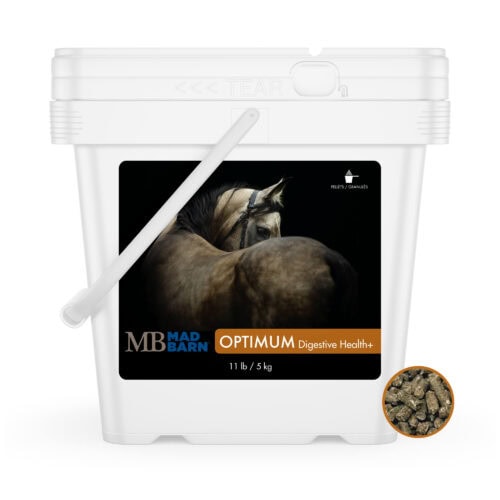
- Optimum Digestive Health is a pelleted probiotic and prebiotic supplement that supports a healthy gastrointestinal tract and helps maintain a balanced microbiome. In Newfoundland ponies with dental issues, feeding this supplement may support nutrient absorption from the diet.
- Jiaogulan is an herbal supplement that supports circulation and hoof health in ponies. Jiaogulan exhibits antioxidant properties and may have benefits for joint health, muscle function and the respiratory system.
Submit your Newfoundland pony’s diet online for a free evaluation, and consult with our experienced equine nutritionists for help formulating a balanced diet.
Frequently Asked Questions
The Newfoundland pony is a small, hardy pony breed from Newfoundland and Labrador, Canada. Newfoundland ponies descended from British pony types brought by English, Irish, and Scottish settlers beginning in the early 1600s. Over centuries, natural selection in a cold coastal climate shaped them into tough, sure-footed ponies able to work on limited forage and withstand harsh weather. The Newfoundland pony is recognized today as a distinct heritage breed and remains critically endangered.
The Newfoundland pony originated from British pony breeds brought to Newfoundland by settlers in the early 17th century. These foundation ponies likely included types similar to Dartmoor, Exmoor, Highland, Fell, and other native British ponies. Once on the island, they were kept in free-roaming herds and bred with minimal human intervention. Over generations, Newfoundland’s cold climate, rugged terrain, and sparse forage helped shape the hardy Newfoundland pony breed.
The Newfoundland pony is critically endangered because its population declined sharply in the 20th century. Mechanization reduced the need for working ponies, restrictions on open grazing disrupted traditional herd management, and many ponies were removed from the island. Although the breed is now protected under Newfoundland and Labrador’s Heritage Animals Act, the breeding population remains small. Its long-term survival still depends on conservation breeding and responsible ownership.
Newfoundland ponies are compact, sturdy ponies known for their hardiness, soundness, and sure-footed nature. Most Newfoundland ponies stand between 11 and 14.2 hands high and typically weigh about 400 to 800 pounds, depending on type and condition. Their dense winter coat, thick mane and tail, furry ears, feathered fetlocks, and durable hooves give them a rugged appearance suited to surviving in colder climates. Although Newfoundland ponies show some variation because of their mixed British ancestry, the overall impression is of a practical, tough pony built for endurance and utility.
Newfoundland ponies come in several solid coat colors, including bay, black, brown, chestnut, dun, gray, and roan. Pinto and spotted patterns are not accepted under the breed standard. Newfoundland pony coats can also appear to change with the seasons because the thick winter coat alters shading and texture. Their heavy coat helps protect them in harsh weather and adds to their distinctive appearance.
The Newfoundland pony is known for having a docile, willing, and easygoing temperament. Newfoundland ponies are typically friendly, curious, and steady, which makes them suitable for a wide range of handlers. Their calm nature and willing work ethic have helped make them popular as family ponies and driving ponies. Like all ponies, individual personalities vary, and some can be bold or cheeky, but consistent training usually brings out their reliable nature.
Newfoundland ponies are generally hardy, but they are prone to a few important health problems. The breed is predisposed to equine metabolic syndrome, which involves insulin dysregulation and increases the risk of laminitis. Senior Newfoundland ponies may also develop dental disease that affects chewing, body condition, and digestion. Some individuals can experience lameness issues such as navicular syndrome, so regular hoof care, weight management, and routine veterinary exams are important.
The best diet for a Newfoundland pony is usually a forage-based diet with controlled calories and balanced nutrients. Most Newfoundland ponies are easy keepers, so they do well on appropriate amounts of average-quality, low-sugar, low-starch hay rather than high-calorie grain-based feeds. They also need constant access to fresh water, plain loose salt to meet sodium needs, and a vitamin and mineral supplement when forage alone does not provide complete nutrition. If a Newfoundland pony is overweight or has insulin dysregulation, pasture access and forage intake often need careful management.
Newfoundland ponies were traditionally used as hardy, versatile all-around working ponies in Newfoundland. Historically, Newfoundland ponies plowed fields, hauled wood and kelp, pulled fishing nets, and transported families. Today, they are used mainly for recreational riding, driving, and family activities. Some Newfoundland ponies also compete in hunter classes, dressage, equitation, trail riding, saddle seat, and harness classes.
Most Newfoundland ponies stand between 11 and 14.2 hands high. This height range makes the Newfoundland pony small enough for many children while still being sturdy and substantial in build. Their height can vary depending on the individual pony’s type and bloodline.
Newfoundland ponies typically weigh between 400 and 800 pounds (180 to 360 kg). Their weight varies based on height, frame, age, and body condition. Some Newfoundland ponies are more refined, while others are stockier and heavier-bodied. Because the breed is prone to easy weight gain, regular body condition monitoring is important.
Newfoundland ponies are often good for beginners because they are typically docile, willing, and easygoing. Their friendly temperament and manageable size make many Newfoundland ponies well suited to families, children, and novice handlers. They are especially appealing as family ponies and driving ponies. As with any breed, suitability depends on the individual pony’s training, manners, and temperament.
Summary
The Newfoundland pony is a critically endangered Canadian heritage breed from Newfoundland and Labrador, developed from British pony stock brought by early settlers.
- The breed descends from multiple British pony types introduced from the early 1600s onward and adapted through natural selection to sparse forage and severe weather in their harsh coastal climate.
- Historically managed in free-roaming herds, these ponies are valued for hardiness, docile temperament, and versatility, but remain at risk due to small population size.
- Newfoundland ponies were historically used as all-purpose working animals for farming, hauling, fishing tasks, and transportation, with numbers peaking in the early 20th century before rapid decline.
- The population fell sharply due to mechanization, restrictions on open pasturing, and exports, leading to formal conservation efforts and protection under the Heritage Animals Act.
- Registered ponies typically stand about 11–14.2 hands and are characterized by sturdy conformation, hard feet, thick coats, and calm, willing temperaments.
- No breed-specific genetic diseases are confirmed, but the breed is prone to equine metabolic syndrome and can develop dental issues and lameness conditions such as navicular syndrome.
References
- Creiger, S. The Newfoundland Pony. Can Vet J. 1993.
- Prystupa, J. et al. Maternal Lineages in Native Canadian Equine Populations and Their Relationship to the Nordic and Mountain and Moorland Pony Breeds. J Heredity. 2012. View Summary
- Sander-Rieger, R. Resistant, Flexible, Diverse: Revaluing Rare Farm Animal Breeds As Countryside Capital. J Rural Community Devel. 2010.
- Schurink, A. et al. The Genomic Makeup of Nine Horse Populations Sampled in the Netherlands. Genes. 2019. View Summary
- Prystupa, J. et al. Genetic diversity and admixture among Canadian, Mountain and Moorland and Nordic pony populations. Animal. 2011.
- Morgan, R. Equine metabolic syndrome. Vet Rec. 2015.View Summary
- Carslake, H. et al. Equine metabolic syndrome in UK native ponies and cobs is highly prevalent with modifiable risk factors. Equine Vet J. 2020. View Summary
- Dixon, P. et al. A review of equine dental disorders. Vet J. 2005. View Summary
- James K. Belknap. Navicular Disease in Horses - Musculoskeletal System. Merck Veterinary Manual. Oct 2015.
- Department of Natural Resources, Hoof Care of the Newfoundland Pony: Common Causes of Lameness. Government of Newfoundland and Labrador. 2010.
- Taylor, D. et al. Short-term effect of therapeutic shoeing on severity of lameness in horses with chronic laminitis. Am J Vet Res. 2002.View Summary
- Watts, K. Forage and pasture management for laminitic horses. Clin Techniq Equine Pract. 2004.
- Zeyner, A. et al. Effect of feeding exercised horses on high-starch or high-fat diets for 390 days. Equine Vet J. 2010.View Summary
- Winter, KA. Gupta, UC. Selenium Content of Forages Grown in Nova Scotia, New Brunswick, and Newfoundland. Canadian Journal of Animal Science. 1979.